
Kitchen extraction cleaning and building access
Kitchen extraction and building layout: plan the right access
Ductwork beyond the kitchen or a fan that is hard to reach?
Discuss the connected route and who controls access.
Agree the cleaning scope and any separate work before booking.
Arrange a kitchen extract cleaning enquiry for a basement, shared building, tall property or older premises. The responding business can establish which sections are accessible, whether a survey is needed and what remains outside the cleaning scope. Building alterations and access approvals need to be defined separately.
Explore UK coverage, Scotland, Wales and Northern Ireland.
Guidance for TR19 Grease cleaning and post-clean reports.
Discuss building access for kitchen extract cleaning
Start with your name, site postcode, phone number and email address. Mention any known access concern if useful; drawings, measurements and old reports are not needed for the first enquiry.
We use your details to respond and arrange follow-up with a cleaning business. About the service.
What will the access discussion resolve?
The practical outcome is a quotation that identifies the connected route, the sections the contractor can reach and any investigation needed before pricing. The canopy, concealed ducts, riser and remote fan can have different access requirements. Existing reports are useful, but a postcode and short description are enough for the first enquiry.
A survey or additional access may be priced separately. Ask what can be cleaned now, which section remains excluded, and who will explain the next step. This helps avoid booking a canopy clean when the concern is further along the route.
A building type does not provide a ready-made risk score. The relevant discussion needs the actual system, its condition, the route and the parts of the property under different people’s control.
How is TR19 cleaning arranged in tall buildings?
A duct route may extend beyond the areas controlled by the kitchen operator. The contractor can discuss the duct route and any access limitations. Where risers, plant spaces or roof areas are outside the kitchen operator’s control, access may require the building manager’s agreement.
Use high-rise and mixed-use planning guidance to coordinate the enquiry with the building manager.
Can basement kitchen extract ducts be cleaned?
Basement duct routes can involve restricted service areas and long runs towards the discharge point. A short enquiry is enough to start; the contractor can clarify the route and any practical access requirements.
Our basement kitchen extraction guide helps prepare the brief. Performance concerns should be identified separately from the hygiene scope.
What happens when the duct route crosses other premises?
Where the kitchen sits below homes, offices or another business, confirm the arrangements for shared access and the work window. Keep the landlord or managing agent involved where their approval is required.
See mixed-use extraction support and responsibility coordination.
Can vertical extract risers be included in cleaning?
A riser may be included where access and the cleaning scope permit. If an area cannot be reached, the contractor should identify that limitation in the handover and explain the available next steps.
Use vertical duct riser guidance to turn the limitation into a defined enquiry.
How is extract cleaning handled in listed buildings?
Tell the provider about known listing status and any proposed changes needed for access. Involve the owner and appropriate advisers before agreeing work affecting the building.
The listed building and conservation-area guide explains how to prepare the permissions and scope discussion.
What if an older kitchen’s duct route is unclear?
Historic drawings may not show later alterations. Gather the best available records and ask the specialist to identify what remains uncertain, rather than assuming the present duct follows the original route.
For a planned replacement or redesign, use kitchen ventilation design guidance to prepare a separate brief.
Does duct cleaning also resolve building fire protection issues?
Cleaning records can show the work performed within scope. They do not establish the fire resistance of an enclosure or the adequacy of the building’s wider fire precautions.
Use fire risk assessment preparation when the concern extends beyond hygiene. Our ductwork fire-spread guide connects the route and evidence questions.
Where can access failures occur along the kitchen extract route?
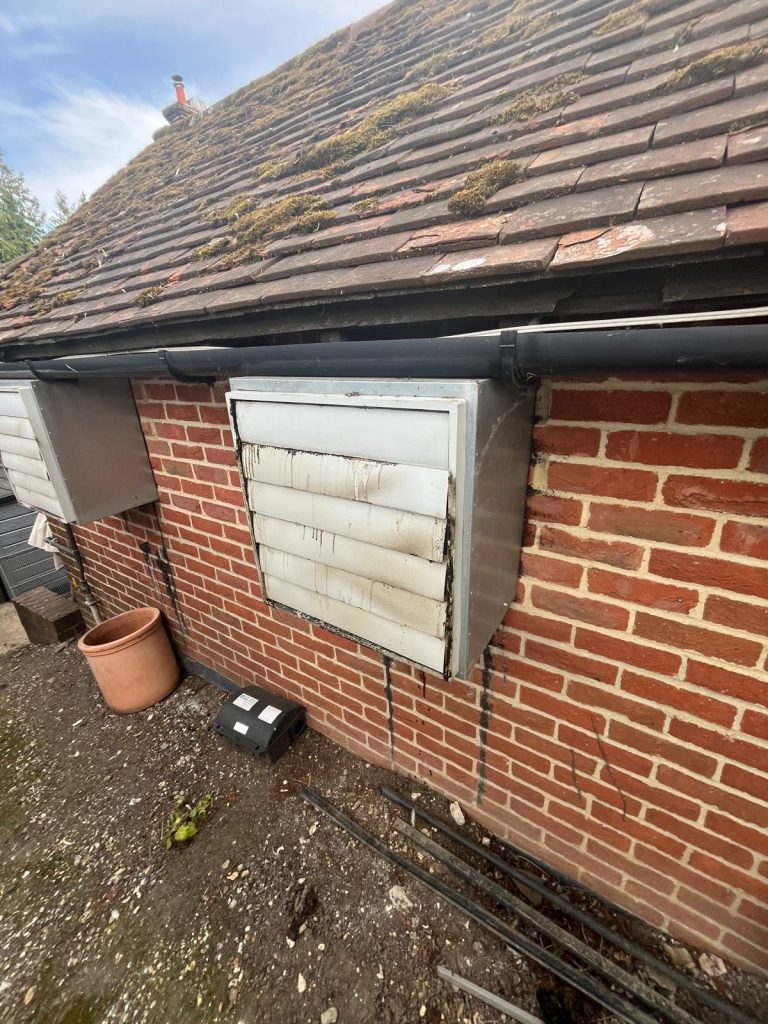
Cleaning access may be available at the canopy but restricted at concealed horizontal ducts, changes of direction, vertical risers, fan housings or roof discharge points. In a shared property, these locations may sit outside the restaurant’s demise. Ask the contractor to identify where it can inspect and clean the route, which sections remain inaccessible and whether any additional access requires building-owner permission.
Do not treat a quotation covering the visible canopy and fan as proof that the entire connected duct route is included. The report must distinguish what was completed from what remains outstanding.
Who decides whether extra access panels can be installed?
The cleaning contractor may recommend better access, but work affecting structure, fire-resisting construction, shared services or protected historic fabric can require a separately specified proposal and consent. The owner, landlord or managing agent may need to approve it, with appropriate technical advice. The operational question for the kitchen is whether the current cleaning can be completed safely and what will happen to the excluded section.
For the installation issue, see kitchen duct access panel planning; for the cleaning appointment, use TR19 Grease cleaning enquiries.