
Kitchen cleaning requirements and defined service scopes
Commercial kitchen cleaning regulations and compliance
Cleaning due or an inspection has identified work?
Separate kitchen surfaces, equipment and grease extraction.
Agree the cleaning scope, price and completion records.
Kitchen cleaning arrangements need to distinguish routine hygiene, deep cleaning and the internal grease-extraction route. Discuss the actual task, finding or deadline, with the responding business confirming its proposed work and records. Cleaning documents describe the agreed job; wider food-safety management, technical assessments and inspection decisions remain separate requirements.
Explore UK coverage, Scotland, Wales and Northern Ireland.
Guidance for TR19 Grease cleaning and post-clean reports.
Discuss your kitchen cleaning and evidence requirement
Enter your name, site postcode, phone number and email address. Mention the task, finding or date if useful; inspection reports, drawings and detailed schedules can follow during discussion.
We use your details to respond and arrange follow-up with a relevant business. About the service.
What does effective kitchen cleaning need to cover?
Food-business cleaning arrangements need to identify the areas and equipment to be cleaned or disinfected, how often and which products are appropriate. A schedule and completion record help show that the routine is being followed.
GOV.UK explains these principles in its food-business cleaning guidance. The practical programme must suit the operation; occasional deep cleaning supports rather than replaces daily hygiene controls.
Commercial kitchen compliance involves several connected tasks. The right response depends on whether the concern is food-area hygiene, grease in the extraction system, ventilation performance or a wider fire-safety finding.
How is extraction cleaning different from a kitchen deep clean?
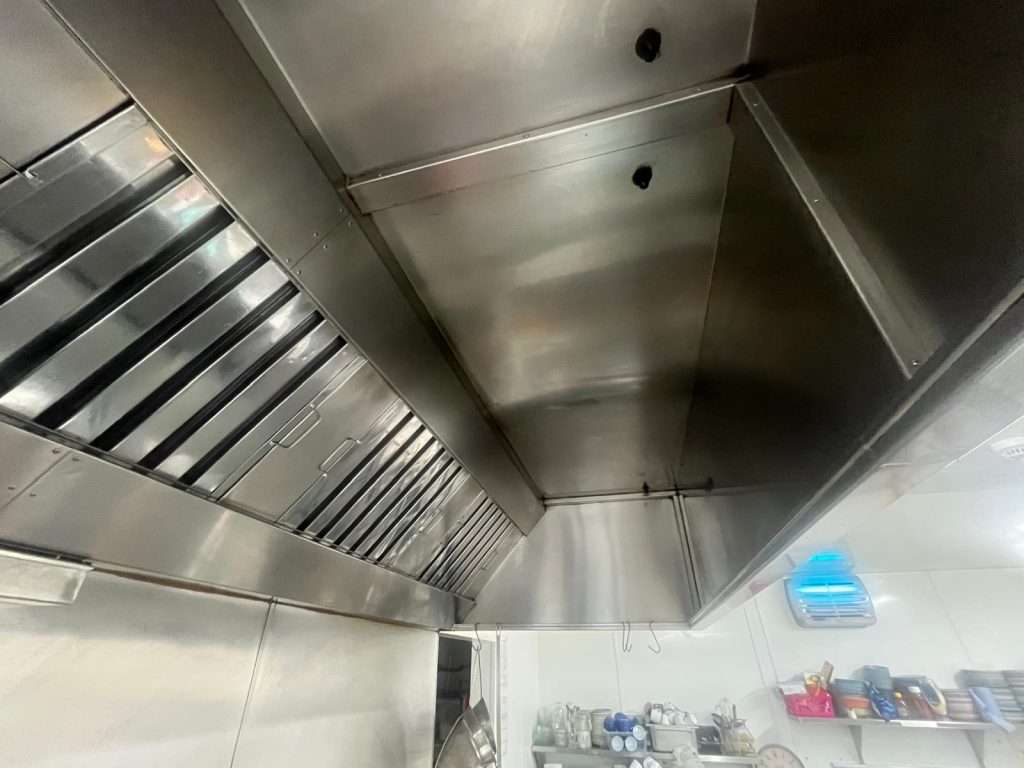
A deep clean addresses the agreed room surfaces and equipment. Kitchen grease extraction cleaning addresses the canopy, ducts, fan and other included sections of the extract route. A clean-looking kitchen does not establish the condition inside those ducts.
See commercial kitchen deep cleaning and TR19 Grease extraction cleaning for the separate scopes.
Where do grease deposits and fire safety fit?
Grease accumulating in an extraction system adds combustible material along the route. Inspection and cleaning arrangements need to account for the kitchen’s use and the sections that can be reached. A recorded exclusion needs follow-up rather than an assumption that the entire system was cleaned.
For an assessor’s finding, use cleaning after a fire-risk finding. Concerns about the wider premises or fire protection need the relevant assessment or remedial specialist.
What cleaning evidence should be kept?
Keep the cleaning schedule and completed records for routine work. Specialist extraction records should identify the site and system, agreed scope, work completed and limitations, with the supporting report and photographs. These records help explain what was done when an inspector, landlord or insurer asks.
A cleaning report supports the stated work; it does not certify every aspect of food safety or fire compliance. The applicable requirements depend on the task and the UK nation. Kitchen extraction documents explained.
Agree evidence without promising an inspection outcome
Ask for records that identify the site, task, work completed and any limitations. Keep wider food safety management, process validation and regulatory decisions with the relevant site team and advisers.
A cleaner’s report documents an agreed job. The extraction documentation guide explains the records relevant to a kitchen extract system.
What about food-production equipment and factory areas?
Production lines, food-contact equipment and general ventilation can require separately specified methods and expertise. They should be identified alongside the kitchen work so the proposed business can confirm suitability and any site-specific requirements. An extraction clean does not automatically cover the production process.
You can enquire about planned cleaning, an inspection finding or work needed before reopening. Explain the immediate concern first; technical details and access arrangements can follow.